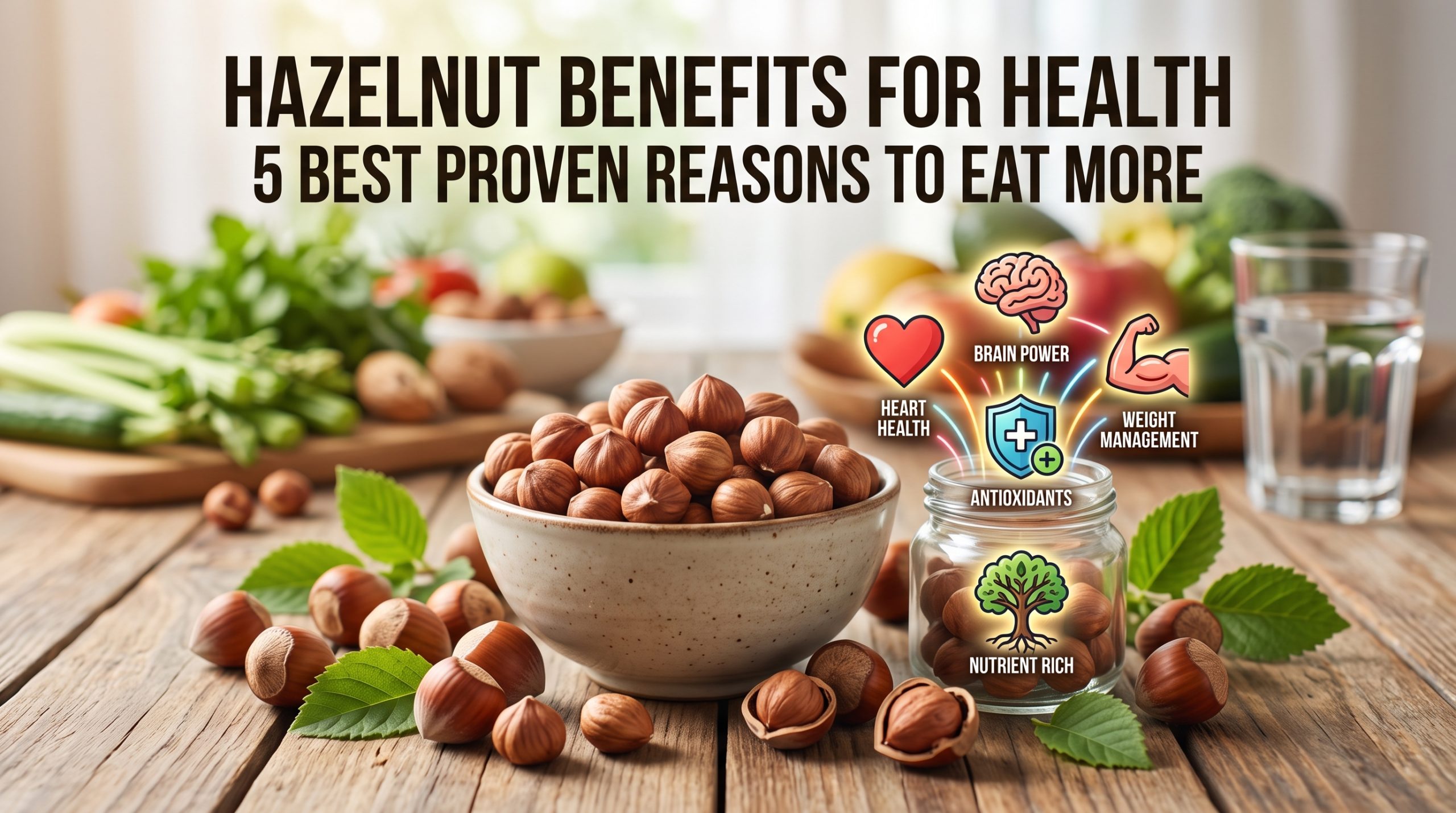
Hazelnuts have been prized by civilisations for thousands of years — and modern nutritional science is finally revealing why. From their exceptional vitamin E content to their ability to support heart health and cognitive function, the hazelnut benefits for health are both varied and well-documented. Whether consumed whole, as a powder, or infused into your daily beverage, hazelnuts are one of nature’s most nutrient-dense tree nuts.

The Impressive Nutritional Profile of Hazelnuts
A 28g serving of hazelnuts delivers an exceptional array of micronutrients in a compact, calorie-efficient package. According to data from the USDA FoodData Central, hazelnuts contain approximately 17g of healthy monounsaturated and polyunsaturated fats, 4.2g of dietary fibre, and meaningful quantities of magnesium, copper, manganese, and vitamins B6 and E. This dense nutritional matrix is precisely what makes the hazelnut benefits for health so broad and so biologically significant.
5 Best Evidence-Backed Hazelnut Benefits for Health
1. Powerful Cardiovascular Protection
The hazelnut benefits for health are perhaps most compelling in the area of cardiovascular disease prevention. Hazelnuts are extraordinarily rich in oleic acid, a monounsaturated fatty acid also found in olive oil, which has been shown to reduce LDL (“bad”) cholesterol while raising HDL (“good”) cholesterol levels. A clinical study published in the Journal of Clinical Lipidology found that a hazelnut-enriched diet significantly reduced total cholesterol and LDL levels compared to a control diet after just four weeks.
2. Exceptional Antioxidant Activity
Hazelnuts are among the richest dietary sources of vitamin E (alpha-tocopherol), delivering approximately 4.3mg per 28g serving — nearly 29% of the recommended daily intake. Vitamin E is a fat-soluble antioxidant that protects cell membranes from oxidative damage caused by free radicals. Beyond vitamin E, hazelnuts contain proanthocyanidins and quercetin, phenolic compounds that further amplify their antioxidant capacity and help reduce systemic inflammation.
3. Cognitive Function and Brain Health Support
The hazelnut benefits for health extend deeply into neurological wellbeing. Hazelnuts are an excellent source of folate (vitamin B9), which plays a critical role in neural tube development and the prevention of homocysteine buildup — an amino acid strongly associated with cognitive decline and increased dementia risk at elevated blood levels. Their vitamin E and polyphenol content also contributes to neuroprotection by reducing oxidative stress in brain tissue.
4. Blood Sugar Regulation and Metabolic Health
Despite their caloric density, hazelnuts have a low glycaemic impact due to their combination of fibre, healthy fats, and protein. This triad slows gastric emptying and blunts post-meal glucose spikes, making hazelnuts a metabolically friendly snack for individuals managing blood sugar levels. Research suggests that regular tree nut consumption — including hazelnuts — is associated with improved insulin sensitivity and a lower risk of developing type 2 diabetes.
5. Digestive Health and Gut Microbiome Support
With 2.7g of dietary fibre per 28g serving, hazelnuts make a meaningful contribution to daily fibre targets. Fibre is the primary fuel source for beneficial gut bacteria, and a diverse, well-nourished gut microbiome is increasingly linked to improvements in immunity, mood, metabolic health, and even cognitive function. Hazelnuts also contain prebiotic fibres that selectively feed Bifidobacterium and Lactobacillus species — two of the most studied beneficial bacterial genera in the human gut.
“Regular consumption of hazelnuts as part of a balanced diet is associated with reductions in cardiovascular risk factors, improved lipid profiles, and enhanced antioxidant status — making them one of the most nutritionally valuable tree nuts available.”
— Journal of Clinical Lipidology, Hazelnut Diet Study
Hazelnut Powder: Nutrition in a Convenient Form
Hazelnut powder — made by finely grinding roasted hazelnuts — retains the same core nutritional profile as whole hazelnuts while offering exceptional versatility in food and beverage applications. The roasting process enhances the intensity of the characteristic toasted aroma by triggering Maillard reactions, which develop hundreds of aromatic compounds responsible for the warm, nutty fragrance. In powdered form, hazelnuts blend seamlessly into hot beverages, delivering their hazelnut benefits for health in a format that is both convenient and delicious.
How Much Hazelnut Should You Consume Daily?
Most nutritional research studies on hazelnuts use daily doses of between 28g–60g (roughly one to two handfuls) to produce measurable health outcomes. At this intake level, hazelnuts contribute beneficial fats, fibre, and micronutrients without displacing other important food groups. As with all calorie-dense foods, moderation and dietary balance remain key — but the evidence strongly supports making hazelnuts a regular part of an active, health-conscious lifestyle.
The Bottom Line: Why Hazelnuts Deserve a Place in Your Diet
From heart protection and antioxidant defence to brain health support and gut microbiome nourishment, the hazelnut benefits for health are wide-ranging, scientifically credible, and accessible. Whether you enjoy them as a wholefood snack, blended into smoothies, or as an aromatic hazelnut powder infused into a warm daily beverage, incorporating hazelnuts into your nutrition routine is one of the simplest, most delicious upgrades you can make for your long-term wellbeing.